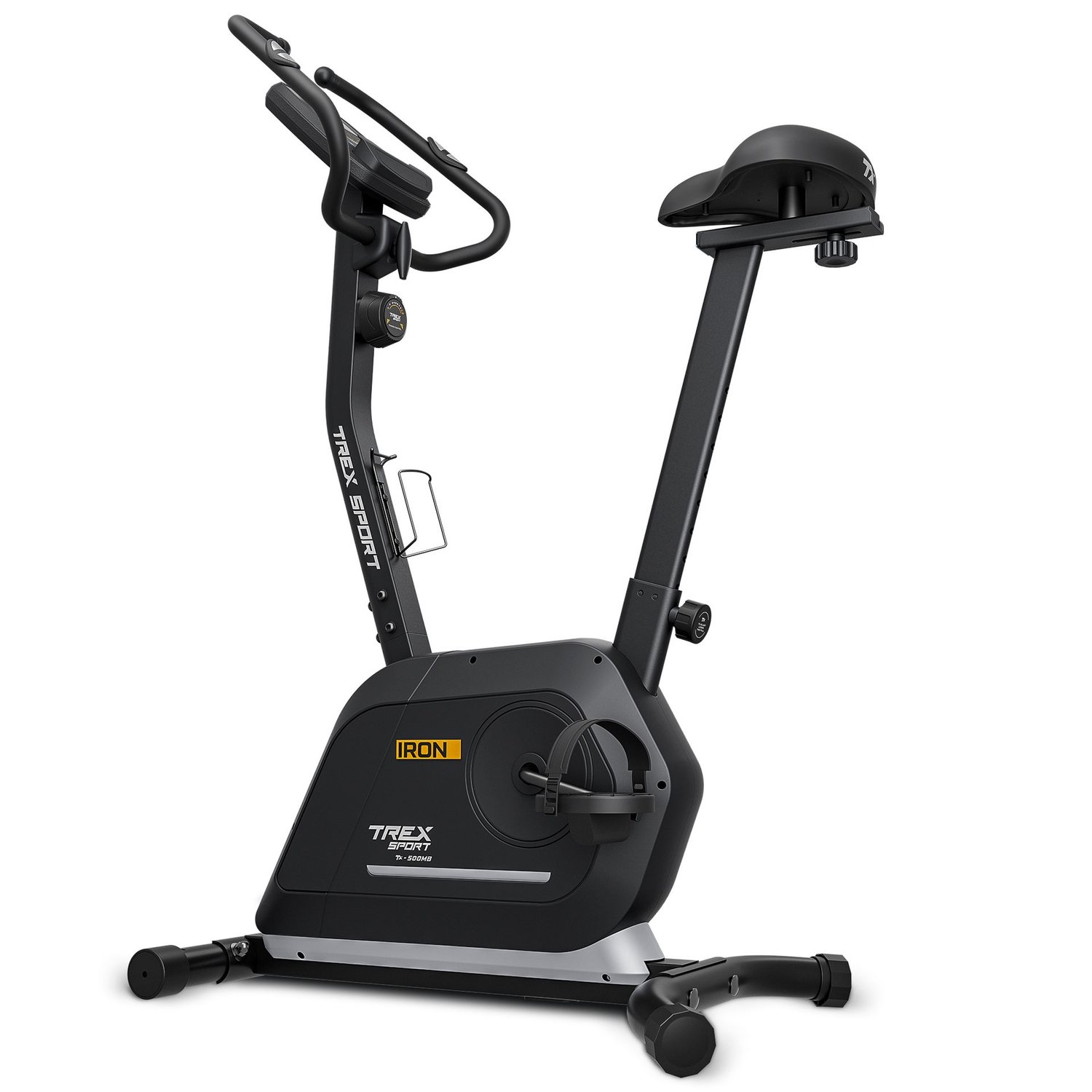

I recently worked on an interesting case involving the TREX SPORT TX-500MB IRON, a magnetic indoor bike that communicates over Bluetooth but does not expose its manually adjusted resistance as an electronically controllable value.
This is not an unusual situation. Many indoor bikes can send cadence, and sometimes a calculated power value, but they do not provide the resistance information that training apps need to reproduce the effort correctly.
That is where QZ can help.
Table of Contents
The problem with bikes that are only partly “smart”
Connecting an exercise bike to a training app does not necessarily provide every piece of data that the app needs. Some bikes transmit cadence correctly but do not expose resistance electronically. Others send a power value calculated by the console, but that value may not be reliable enough to use directly in Zwift or in a structured workout.
The bike works, the Bluetooth connection works, but the digital representation of the workout is incomplete.
The resistance is adjusted with a knob or a lever on the bike, while the app receives only part of the picture. In some cases, the bike also reports a built-in wattage value that the rider would rather not use.
QZ is designed to sit between the equipment and the training applications. It can use the data that is available, ignore data that is not useful, and build a more consistent estimate from the real behaviour of the bike.
The TREX SPORT TX-500MB IRON case
The TREX SPORT TX-500MB IRON is a magnetic exercise bike with manually adjusted resistance. The manufacturer lists 14 resistance levels and Bluetooth connectivity to the FitShow app.
The important detail is that the resistance is manual. There is no electronic resistance motor for QZ or another training app to control directly.
The QZ pull request #5005 was created for this specific case. The proposed implementation recognises the bike as TX-500MB IRON, enables manual resistance mode and uses QZ’s custom resistance/power table.

In practical terms, QZ does not try to move the physical resistance knob. The rider still chooses the resistance level manually. QZ can then use that level together with cadence to calculate a more useful power value for the virtual training environment.
The proposed change also prevents the gear multiplier from being applied twice when the custom table is enabled. This is a small but important detail: a calibration is useful only when every part of the calculation is applied once, and only once.
How do you calibrate a bike like this?
Calibration does not turn an exercise bike into a certified power meter. It creates a practical model of how that specific bike behaves.
The relationship is relatively simple:
cadence + manual resistance level → estimated power
The difficult part is collecting good data.
A useful method is to test the different resistance levels while keeping cadence as steady as possible. Cadence, resistance and power values can then be collected and compared over several rides. This is the same type of process already used in the QZ community to build a bike-specific table. The more data points are available, the more closely the curve can represent the real behaviour of the bike.
When possible, an external power meter is the best reference. If that is not available, the values reported by the bike can still be used as a starting point, as long as the result is treated as an estimate and checked during real workouts.
A table should not automatically be considered valid for every unit of the same model. Mechanical differences, maintenance, rider position and cadence can all affect the result.
Within QZ, custom tables can also be used to adapt virtual gear behaviour to the preferences and characteristics of a specific bike.

A solution for many other indoor bikes
The TX-500MB IRON is only one example of a much broader category:
- bikes with manually adjusted resistance;
- FTMS bikes that communicate cadence but not a useful numerical resistance value;
- bikes that report an internal wattage value that the user does not want to trust;
- models that need their own cadence/resistance/power curve.
QZ already supports ERG workflows and settings based on the relationship between cadence and watts. In an ERG workout, the software can use that relationship to look for the resistance needed to approach a power target.
The same idea can be useful outside the traditional smart-trainer world. Instead of requiring every bike to expose every value perfectly, QZ can work with the information that the equipment actually provides and fill the gap with a model that is specific to that bike.
The pull request also extends the heart-rate fallback for FTMS bikes. When Ignore built-in wattage is enabled, and neither an external power sensor nor an external cadence sensor is enabled, QZ can use heart-rate-based power instead of the integrated FTMS wattage.
This is useful when the number is available, but does not describe the rider’s effort well enough.
The idea behind QZ
I don’t think an indoor bike needs to be completely “smart” to be useful with modern training apps.
If it provides readable cadence and the rider can identify the resistance levels, there is a starting point. With enough measurements, QZ can help reconstruct the behaviour that matters for digital training.
The final result depends on the quality of the calibration and on real-world testing. It is still an estimate, not a certified measurement. But it can be enough to make a simple indoor bike much more useful with Zwift and other training platforms.
The TREX SPORT TX-500MB IRON is a good example of this approach. The bike does not need to expose every detail electronically. QZ can understand what is available, model what is missing and make the whole setup more useful.
At the time of writing, PR #5005 is still open and the on-device verification of the HR-power and manual-resistance paths is still part of the test plan. The implementation should therefore be considered a work in progress until it is merged, tested and included in a usable QZ release.
If something does not work as expected, send an email to Roberto.viola83@gmail.com and Roberto will help you check the setup.
Product reference
The bike images in this article are from the official TREX SPORT TX-500MB IRON product page. The comparison with other bikes is intended as a general explanation and does not imply QZ compatibility for every similar model.
Want to use your indoor bike with QZ? Learn more at qzfitness.com.