
Table of Contents
inSPORTline ZenRoute 300 and QZ: Connected Cycling with MyWhoosh and Smart Resistance
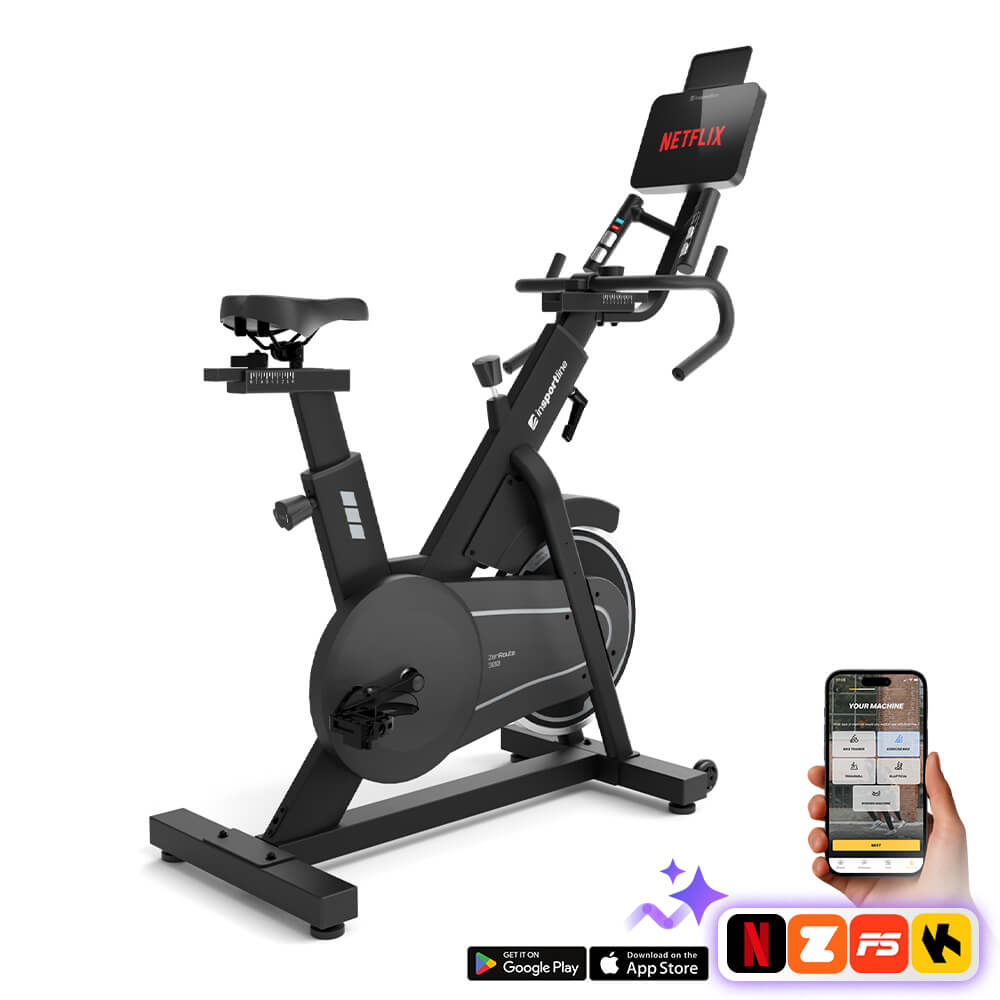
The inSPORTline ZenRoute 300 is a modern indoor exercise bike with electronically controlled magnetic resistance, a large TFT display and a training-focused design. With QZ, the ZenRoute 300 can become part of a flexible connected-cycling setup with live workout data, MyWhoosh support and resistance control.
The confirmed QZ workflow uses the bike’s FTMS connection together with the Hammer Racer option in QZ. Once configured, QZ can act as the bridge between the ZenRoute 300 and MyWhoosh while keeping the bike’s power, speed, cadence and resistance workflow available for connected training.
Connect the ZenRoute 300 to QZ
Use the following setup for the ZenRoute 300:
- Wake the bike and close other fitness apps that may be connected to it.
- Open QZ and choose Bike as the fitness device type.
- Open Bike Options and enable Hammer Racer.
- Use the ZenRoute FTMS/Manual Device connection shown by QZ when selecting the bike.
- Close and restart QZ so the profile and Bluetooth connection are initialized cleanly.
- Open MyWhoosh and connect it to the QZ bridge.
- Start pedaling and confirm that power, speed and cadence are updating.
- Test a resistance change before beginning a longer workout.
The exact device label can vary slightly with the QZ build, but the important part is the ZenRoute FTMS path together with the Hammer Racer option. Once the bike is connected, QZ provides the data and control bridge while MyWhoosh supplies the virtual training environment.
What QZ adds to the ZenRoute 300
The confirmed setup provides a connected workflow for the bike’s main training signals and resistance control:
- live power data;
- speed and cadence;
- workout telemetry for MyWhoosh;
- electronically controlled resistance changes;
- a bridge between the ZenRoute 300 and compatible training applications;
- a more flexible way to record and use indoor cycling sessions.
The ZenRoute 300 remains the physical exercise bike, while QZ makes its data and supported controls available to the wider connected-training ecosystem.
MyWhoosh and connected indoor cycling
With QZ between the bike and MyWhoosh, the virtual cycling application can receive the workout data needed for a moving avatar and an interactive training session. The rider can keep the ZenRoute 300 in front of them while using a phone, tablet or another screen for the virtual environment.
The setup is useful for structured sessions, virtual routes, endurance rides and interval workouts. Resistance changes can be tested before the session and then used as part of the connected workout workflow supported by the selected app and profile.
The wider QZ ecosystem
Beyond this device-specific connection, QZ can act as a flexible training and data bridge across a much wider fitness ecosystem. The exact options depend on the selected profile, platform and hardware, but the broader QZ toolkit includes:
- customizable tiles, multiple profiles and UI zoom controls;
- Peloton bike metrics, power zones, resistance conversion and supported auto-resistance workflows;
- Apple Watch, ANT+ and Bluetooth heart-rate support, custom heart-rate zones and wattage estimation from heart rate and cadence;
- Zwift, Wahoo RGT, VzFit, Rouvy, iFIT, Echelon, BitGym and Wahoo DirCon where supported;
- Kinomap, MyWhoosh and other compatible apps when the selected device workflow supports them;
- local or cloud video, GPX route following, 2D/3D maps, ZWO and XML workouts;
- heart-rate-following workouts, random workouts, standalone QZ workouts and structured/ERG sessions;
- end-of-workout email reports, Strava uploads, Garmin FIT/Garmin Connect workflows, Apple Health/HealthKit and Google Health/Google Health Connect integrations where supported;
- MQTT, OpenSoundControl/OSC, text-to-speech/TTS, Bluetooth remote resistance shifting, Zwift Play & Click and ANT+ retransmission.
These are QZ ecosystem capabilities rather than a promise that every function is native to the ZenRoute 300. The device-specific FTMS connection, Hammer Racer option and confirmed MyWhoosh workflow remain the authoritative setup for this bike. Third-party apps may also have their own account, subscription and content requirements.
A more flexible ZenRoute 300
The inSPORTline ZenRoute 300 already provides a solid indoor-cycling platform with electronically controlled resistance and a large training display. QZ adds the connection layer that lets the bike work with MyWhoosh and a broader set of training, health and workout-recording workflows.
Enable Hammer Racer in QZ, use the ZenRoute FTMS/Manual Device path, restart QZ and connect MyWhoosh to the bridge. Once power, speed, cadence and resistance respond correctly, the ZenRoute 300 is ready for connected indoor training.
If something does not work as expected, send an email to Roberto.viola83@gmail.com and Roberto will help you check the setup.
Learn more about QZ at qzfitness.com.